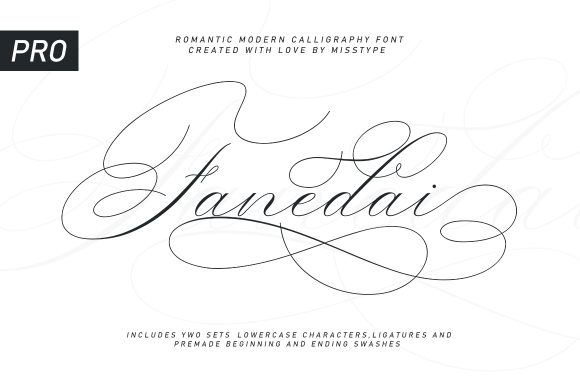
Fanedai: A Modern Handwritten Font for Heartfelt Craft Projects
There’s that quiet moment—just before pressing “print”—when you zoom in on your candle label mockup and realize the font isn’t *quite* right. It’s too stiff, too generic, or worse—it doesn’t whisper “handmade with care.” That’s when I reached for Fanedai: a Script Handwritten font that feels like ink just dried on creamy paper, complete with its signature heart character that lands softly—not cutesy, not forced, but genuinely warm. As a maker who designs printable wall art, wedding stationery, and boutique packaging week after week, Fanedai became my go-to Fonts pick for anything needing authenticity without sacrificing polish.
Fanedai for Wedding Invitations and Elegant Branding
I used Fanedai to design a set of minimalist wedding invitations for a spring elopement—just names, date, and location, all centered on ivory linen cardstock. The flow of the Script Handwritten strokes gave each line breathing room and intention. Because Fanedai is a display-focused Fonts choice (not meant for long paragraphs), I kept wording tight and let the letterforms shine. Paired with a clean sans serif like Montserrat Light for addresses and details, the contrast elevated the whole suite—soft yet confident, romantic but never saccharine. The special heart character? Placed delicately between the couple’s names. No extra graphics needed. Just one thoughtful glyph doing the emotional work.
Fanedai for Greeting Cards That Feel Like a Hug
For my seasonal greeting card collection—think birthday, thank-you, and “just because”—Fanedai adds instant personality. As a Script Handwritten typeface, it thrives in short, expressive phrases: “You’re My Person,” “Happy Birthday, Love,” or even playful ones like “Oops. I Forgot Your Present… But Not Your Heart.” Because Fanedai is designed for visual impact, not body text, I reserve it for headlines and signatures only—and always test readability at 14–18pt on matte sticker paper and kraft cardstock. On small die-cut stickers? It holds up beautifully if scaled no smaller than 10pt. For digital downloads sold as editable Canva templates, I include clear usage notes: “Use Fanedai for titles only; pair with a simple sans serif for body copy.”
Fanedai for Printable Wall Art and Planner Pages
When designing printable wall art—especially botanical quotes or affirmations—I lean into Fanedai’s natural rhythm. Its slight variation in stroke weight and organic spacing makes quotes like “Grow Through What You Go Through” feel tender and true. As a Script Handwritten font, Fanedai performs best at larger sizes (24pt+), so I build my 8×10” prints around generous leading and generous margins. For planner pages, I use Fanedai sparingly: section headers (“This Week,” “Gratitude Log”), decorative dividers, and motivational headers—never for daily grids or checkboxes. It’s a premium Fonts asset that earns its place through intention, not volume.
Fanedai for Product Labels, Tags, and Packaging Design
My small-batch soy candles live on shelves where first impressions are made in under three seconds. That’s why I switched their front labels from a basic script to Fanedai. The Script Handwritten style signals handmade, while the subtle heart glyph appears beside scent names (“Lavender & Honey ❤”)—a tiny detail customers pause to notice. Before cutting vinyl for jar tags, I always check how Fanedai renders in Silhouette Studio and Cricut Design Space: no overlapping paths, smooth curves, and no thin terminals that might snap during weeding. Pro tip: install the OTF version (not TTF) for cleaner vector output. And yes—it’s fully licensed for commercial use, so every candle, tote bag, or tea towel label stays compliant.
Fanedai for Digital Downloads and Editable Template Previews
When building Canva-compatible digital downloads—like bridal shower planners or holiday card templates—I embed Fanedai as a recommended font in the instructions. Why? Because buyers want that authentic, hand-lettered look *without* installing fonts themselves. So I preview every template using Fanedai, then note: “Font included—commercial license verified.” Since Fanedai is a Fonts file with OpenType features, I also mention ligatures and alternates in the description—helpful for creators who want to swap “&” for the heart glyph or access swash capitals for titles. It’s not just about aesthetics; it’s about giving other makers real creative control.
Fanedai Paired With Clean Sans Serif Fonts for Balanced Layouts
No Script Handwritten font stands alone forever—and Fanedai shines brightest when grounded. I consistently pair it with neutral sans serifs: Inter for web previews, Poppins for social media graphics, or Lato for printed product tags. The contrast creates hierarchy without competition. For example, a mug design might feature “Good Morning, Love” in Fanedai, with “Hand-poured • Small Batch” set in thin-weight Inter beneath. That balance tells a story: warmth + craftsmanship. If you’re using Fanedai for shop banners or Etsy listing images, keep the pairing consistent across all touchpoints—it builds recognition faster than any logo could.
Fanedai for Seasonal Craft Designs and Holiday Tags
Last December, I designed a set of kraft gift tags using Fanedai for names and “To” lines—then added the heart glyph as a subtle ornament beside “Merry Everything.” Because Fanedai is a Script Handwritten font with graceful entry/exit strokes, it flowed naturally onto curved tag edges and held up when laser-cut at 1.25”. For digital holiday printables, I tested how Fanedai rendered in PDF thumbnails—no pixelation, no jagged edges. And since it’s a fully functional Fonts file with standard Unicode support, names with accents (José, Mireille) stayed intact across platforms. That reliability matters when your craft business depends on trust—and flawless execution.